Story Metadata (32,523 Stories)

366 Items
99% NOT STARTED
1% EDIT
0% REVIEW
0% COMPLETED
Medical recipe collections || Medizinische Rezeptsammlungen
366 Items
Description: Shelfmark: Universitätsbibliothek Heidelberg, Cod. Pal. germ. 802

2 Items
50% NOT STARTED
50% EDIT
0% REVIEW
0% COMPLETED
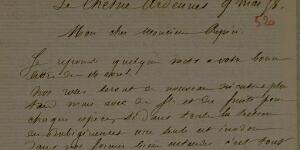
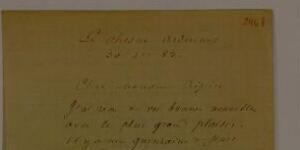
Handschriftliches Schriftstück aus Akte Kielmeyer
2 Items
Description: Schriftstück, handschriftlich aus Akte Kielmeyer.

216 Items
97% NOT STARTED
1% EDIT
1% REVIEW
0% COMPLETED
Medical recipe collection || Medizinische Rezeptsammlung
216 Items
Description: Shelfmark: Universitätsbibliothek Heidelberg, Cod. Pal. germ. 758

7 Items
86% NOT STARTED
14% EDIT
0% REVIEW
0% COMPLETED
FRAD068_041 Livre d'or d'une infirmière et documents familiaux
7 Items
Description: Le livre d'or a appartenu à Mme Jeanne KUSTER, fille ou petite fille du Maire de Saint-Amarin de l'époque. On y trouve notamment des remerciements et des mots écrits par des soldats blessés et soignés à l'hôpital de Saint-Amarin. Il est également agrémenté de dessins. Plusieurs extraits de ce journal sont présentés ici. || Le livre d'or a été acheté dans un marché aux puces à Kingersheim, il y a une dizaine d'années. La photographie vient de la famille. || || Dessin d'un alsacien et d'une alsacienne || Guerre mondiale (1914-1918) -- France || Autograph || Remembrance || Guerre mondiale (1914-1918) || 47.8600489,7.049144999999953 || Français || || Français || Autograph || Dessin d'un tirailleur sénégalais || Guerre mondiale (1914-1918) -- Caricatures et dessins humoristiques || Guerre mondiale (1914-1918) || Selon le contributeur, l'homme représenté est le premier tirailleur sénégalais blessé. || Guerre mondiale (1914-1918) -- France || Remembrance || || Guerre mondiale (1914-1918) -- France || Français || Autograph || Remembrance || Extrait du livre d'or || Guerre mondiale (1914-1918) || || Autograph || Remembrance || Extrait du livre d'or || Guerre mondiale (1914-1918) -- France || Guerre mondiale (1914-1918) || || Français || Extrait du livre d'or || Autograph || || Guerre mondiale (1914-1918) -- France || Autograph || Extrait du livre d'or || Remembrance || Guerre mondiale (1914-1918) || English || || Première distribution solenelle de prix à Saint-Amarin || Remembrance || Français || Cette photographie marque le début de la reconquête française de l'Alsace. || Guerre mondiale (1914-1918) -- France || Photograph || Guerre mondiale (1914-1918)
1 Item
0% NOT STARTED
100% EDIT
0% REVIEW
0% COMPLETED
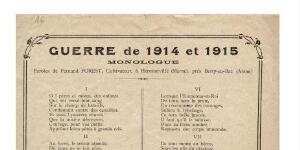
Monologue sur la guerre de 1914 et 1915.
1 Item
Description: Texte imprimé intitulé Monologue sur la guerre de 1914 et 1915. Paroles de Fernand Forest, compositeur, cultivateur à Hermenonville (Marne) près Berry-au-Bac (Aisne), actuellement réfugié de guerre, 8 place de la République à Limoges (Haute-Vienne).

3 Items
67% NOT STARTED
33% EDIT
0% REVIEW
0% COMPLETED
FRAD008_22 Documents sur la famille Grunenberger
3 Items
Description: Grand-père paternel de la contributrice, Edmond Grunenberger est né le 10 janvier 1879. Fait prisonnier au fort de Charlemont à Givet (Ardennes), il est interné pendant 4 années au camp de Zwickau en Allemagne. Diplômé ingénieur en 1900, il est devenu directeur de l'usine métallurgique d'Aubrives (Ardennes), Pont-à-Mousson-Villerupt (Meurthe-et-Moselle), un groupe industriel qui ne comptait pas moins de 900 ouvriers. Naissance le 28 septembre 1882 à Nouzonville (Ardennes) de Georges Grunenberger, frère d'Edmond et grand-oncle de la contributrice. Incorporé au 214e régiment d'infanterie, il est tué au combat le 8 septembre 1916 à Verdun (Meuse). Il repose dans le cimetière militaire de Belleray (Meuse). C'était un artiste peintre qui possédait une chambre à Montmartre (Paris). La maison de leurs grands-parents, située 81 rue de Lorraine à Nouzonville (Ardennes), a servi de cantine aux Allemands en 1917.Raymond Masson, onle par alliance de la contributice, est né en 1894 à Reims et résidait à Aubrives (Ardennes). Il s'est échappé de la zone occupée pour se mettre au service de la France et a combattu au sein du 148e régiment d'infanterie. Il a reçu la médaille des évadés. || || Guerre mondiale (1914-1918) || Nouzonville (Ardennes) || Maison des grands-parents d'Edmond et Georges Grunenberger à Nouzonville (Ardennes) servant de cantine aux Allemands en 1917 || Photograph || || Carte d'identité d'Edmond Grunenberger || Nouzonville (Ardennes) || Guerre mondiale (1914-1918) || Official document || || Photograph || Georges Grunenberger || Guerre mondiale (1914-1918)

2 Items
0% NOT STARTED
50% EDIT
50% REVIEW
0% COMPLETED
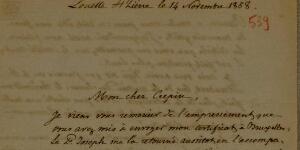
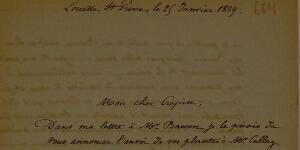
Schreiben von Sophie Sautier an die Großherzogin Luise; Zusendung des Protokolls des Arbeitsausschusses des Landesverbandes zur Bekämpfung der Tuberkulose
2 Items
Description: Hierarchie: Großherzogliches Familienarchiv (Eigentum des Hauses Baden) und Markgräfliches/Großherzogliches Familienarchiv: Nachträge >> Einzelne Angehörige des Hauses Baden >> [13 A] Luise Großherzogin von Baden (1838-1923) >> Familie, Hof, Regierung >> Soziales, Wohltätigkeit >> Badischer Frauenverein >> Geschäftsberichte >> Berichtserien >> Dr. Sophie Sautier [Präsidentin von Abteilung V]

1 Item
0% NOT STARTED
100% EDIT
0% REVIEW
0% COMPLETED
Kreuter Buch : Darin Vnderscheid, Würckung vnd Namen der Kreuter, so in Deutschen Landen wachsen, Auch der selbigen eigentlicher vnd wolgegründter gebrauch inn der Artznei (Kräuter-Buch)
1 Item
Description: From the Cretaceous underscheid/Von der kraffte und Würckung. (Teuffels-Abbiß/Ordöhnliche Teufelsabbis, Wolffswurcz and Ysenhütlein/Eisenhut also assault hat, Akonit, formerly Wolfswurz) Leaf 94 verso and 95 recto aus: Bock, Jerome: Cretaceous book: In it Vnderscheid, stranglehold of the creatures, growing in German lands, even the rare real vnd wolf-based use in the Artznei. Strasbourg: Rihel, 1546. Dresden: SLUB Botan.59 || || in color, quer || Von der kreiiter underscheid / Von der kraffte und würckung. (Teuffels-Abbiß / Gewöhnlicher Teufelsabbiss, Wolffswurcz und Ysenhütlein / Eisenhut auch Sturmhut, Akonit, früher Wolfswurz) Blatt 94 verso und 95 recto aus: Bock, Hieronymus: Kreuter Buch : Darin Vnderscheid, Würckung vnd Namen der Kreuter, so in Deutschen Landen wachsen, Auch der selbigen eigentlicher vnd wolgegründter gebrauch inn der Artznei. Straßburg: Rihel, 1546. Dresden: SLUB Botan.59

19 Items
95% NOT STARTED
5% EDIT
0% REVIEW
0% COMPLETED
Stahlfachmann in Constantinopel
19 Items
Description: Der Urgroßvater von Beate Schreiber, Carl Schubert aus Spandau von den Stahlwerken in Spandau wurde als Berater und Vorarbeiter zu den Osmansichen Stahlwerken in Constatinopel entsandt. Deutsche Militär Mission Konstantinopel, Marinearsenal, Stahlwerk. Die Sammlung besteht aus Fotos von Carl Schubert in Konstantinopel und in den Stahlwerken und der Korrespondenz mit seiner Frau und seiner Tochter in Spandau. 46 Postkarten und 3 Briefe. Die Postkarten wurden in der Regel mit Kaiserl. Marine Schiffpost als Feldpost verschickt. Reiseweg Berlin Konstantinopel und Fotos von Carl Schubert in Konstantinopel.
1 Item
0% NOT STARTED
100% EDIT
0% REVIEW
0% COMPLETED
Jens Wilken Hornemann to Charles-François Brisseau de Mirbel || Jens Wilken Hornemann an Charles-François Brisseau de Mirbel
1 Item
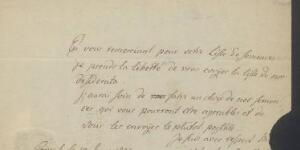
Description: Eigenhändiger Brief mit Unterschrift von Jens Wilken Hornemann (06.03.1770, Marstal – 30.07.1841, Kopenhagen), dänischer Botaniker, an Charles-François Brisseau de Mirbel (27.03.1776, Paris – 12.09.1854, Champerret), französischer Botaniker, Kopenhagen 19.01.1836. Hornemann verbrachte seine berufliche Laufbahn als Botaniker in Kopenhagen. Zunächst war er Dozent am Botanischen Garten, ab 1808 Professor für Botanik. Neun Jahre später übernahm er zusätzlich das Amt des Direktors des Botanischen Gartens.

102 Items
92% NOT STARTED
7% EDIT
1% REVIEW
0% COMPLETED
Diary 9: August 1940 - April 1941
102 Items
Description: Handwritten and typed diary entries relating to Lester's time as Acting Secretary General of the League of Nations in Geneva. One of the most notable entries in this diary is Lester's extensive account of his meeting with James Joyce and his family in Geneva in December 1940. The Joyce family had fled their home in Paris the previous May and sought Lester's help in obtaining a visa for their daughter Lucia; the Nazis had refused to issue her with a visa and she remained in a mental health clinic in German-occupied France. A related letter from Joyce to Lester prior to this meeting is also included in the diaries, as are letters from Giorgio Joyce, son of James and Nora Barnacle [Joyce], and Carola Giedion-Welcker, a German-Swiss art historian and close friend of the Joyce family, following the death of James Joyce in Zurich less than a month later. Diary also includes letters and telegrams from: Alec [Alexander] Loveday, Director of the Economic, Financial, and Transit Department of the League; Sir Walford Selby, British diplomat; Arthur Sweetser, League of Nations Public Information Section; John Gilbert Winant, Director- General of International Labour Organisation; [Humphrey] Hume Wrong, Canadian Advisory Officer to the League of Nations; Elizabeth Wiskemann, British historian; Royall Tyler, Economic and Financial Section of the League of Nations; Carl Hambro, Head of the Supervisory Commission of the League, and René Massigli, French diplomat. Also includes letters and telegrams to: Ned [Edward Joseph] Phelan, International Labour Organisation; Carl Hambro, Head of the Supervisory Commission of the League; Elsie Lester; copy letter from Seán Murphy, Irish Minister Plenipotentiary in France to James Joyce, author; Nora Barnacle, wife of James Joyce, and Frank P Walters, Deputy Secretary General of the League of Nations. Some of the diary entries and correspondence 15 feature codenames with later annotations by Lester giving the individuals' real names. Diary also includes two black and white photographs: one of the overturned bus that Alec [Alexander] Loveday and others had been travelling in when it crashed near Grenoble, France, in August 1940, and the other is of a Connemara pony taken by Ann Lester [Gorski].

12 Items
92% NOT STARTED
8% EDIT
0% REVIEW
0% COMPLETED
Militärpass des Unteroffiziers Hans Hümke
12 Items
Description: Hans Hümke trat mit 15 Jahren am 29.10.1914 als Freiwilliger in den Heeresdienst ein und kam zunächst zum Ersatzbataillon des Fußartillerieregiments 1. Anfang Januar 1915 wurde er zur 7. Batterie desselben Bataillons versetzt. Ab Februar 1915 bis Mai 1918 diente er im Königlich-Preußischen 1. Garde-Reserve Fußartillerieregiment, 3. Batterie, und wurde während dieser Zeit zum etatmäßigen Unteroffizier befördert. Er war zunächst an der Ostfront im Einsatz, so nahm er u.a. an der Schlacht bei Wilna (Oktober 1915), bei Riga (September 1917) und bei Kämpfen in der Ukraine (Februar/März 1918) teil. Im April 1918 wurde er an die Westfront beordert und nahm an den Stellungskämpfen in Flandern und bei der Schlacht und der Erstürmung des Kemmelberges (Belgien) teil. Hümke wurde verwundet und kam ins Lazarett. Nach dem Krieg, am 29.04.1920, wurde er zum Sergeant befördert. In dem letzten Eintrag vom 27.10.1920 wird vermerkt, dass er zur Fußabteilung der 5. Batterie des Reserve-Artillerieregiments 1 versetzt wurde. Hümke zog auch in den Zweiten Weltkrieg und starb im Dezember 1944 bei Kampfhandlungen. || Militärpass von Hans Hümke, dem Vater von Marianne Jörß.

32 Items
97% NOT STARTED
3% EDIT
0% REVIEW
0% COMPLETED
9 Items
56% NOT STARTED
33% EDIT
11% REVIEW
0% COMPLETED
CAOLA ANTONIO
9 Items
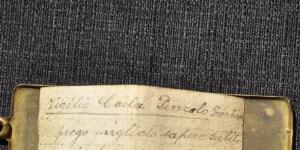
Description: CAOLA ANTONIO padre dell’intervistato (Pinzolo 28 gennaio 1891 – Pinzolo, 1960) Soldato austriaco inviato sul fronte orientale in Galizia Antonio da giovane fece il commesso contabile alla cooperativa di Bocenago dove si recava giornalmente con la bicicletta. Il padre, impiegato comunale, si chiamava Virgilio, la mamma Luigia Bonapace. Aveva una sorella Isidora ed un fratello, Ippolito, che faceva il mestiere dell’arrotino. Ippolito parlava, seppure sommariamente, il francese e l’inglese come è documentato dal libretto di Guida Alpina rilasciatoli nel 1912. Nel 1914, allo scoppio della guerra, Antonio e Ippolito furono arruolati nell’esercito austro-ungarico. Dopo un periodo di addestramento in Alto Adige, furono mandati sul fronte orientale, in Galizia, separatamente. Antonio fu fatto prigioniero da Russi il 7 settembre 1914 in Galizia, durante la terribile battaglia di Godex-Ravaruska conclusasi con una grave sconfitta per l’Austria. Dopo lunghe marce forzate a piedi e su tradotte militari, Antonio, con gli altri prigionieri arrivò a Kiev e da lì portato nella gelida Siberia nei campi di concentramento di Tjumen, tara e Omsk. Un anno dopo ritorna a Mosca e infine internato a Kirsanov dove era allestito il campo di raccolta dei soldati prigionieri in attesa del rimpatrio. La prigionia era aggravata dalla fame e dal freddo intenso che induceva i prigionieri a cercare lavoro e cibo presso i casolari dispersi nella campagna. Nel 1916 Antonio colse l’opportunità di far parte degli irredenti trentini che dichiarando di sentirsi italiani poterono rientrare in Italia. I trentini e i giuliani che aderirono a tale proposta furono circa 4000 e suddivisi in scaglioni furono fatti rientrare in Italia. Alcuni partendo dal porto di Arcangelo e passando per Capo Nord arrivarono in Inghilterra, poi in Francia ed infine in Italia, a Torino. Il primo scaglione partì da Arcangelo il 14 settembre 1916 e attivò a Torino il 9 ottobre 1916. Arrivato a Torino, Antonio trovò lavoro presso un negozio di generi alimentari e dopo qualche tempo venne chiamato dalla famiglia dei marchesi Guerrieri Gonzaga a prestare servizi a Roma dove rimase fino alla fine della guerra. (La marchesa gemma Guerrieri Gonzaga fu una delle fondamentali artefici del rientro dei soldati prigionieri trentini e giuliani dalla Russia) . Nel gennaio 1919, dopo molti anni di lontananza, convalescente dell’influenza “spagnola”, poté tornare finalmente a casa, purtroppo senza poter riabbracciare i suoi familiari. Nel frattempo, infatti, i genitori era morti e il fratello Ippolito era caduto in guerra. La sorella Isidora si era sposata con Vigilio Pedri il quale, dopo un breve periodo di emigrazione a New York , si era stabilito a Guidizzolo (Mantova) dove aveva aperto un negozio di chincaglierie e di vetri. Antonio nel 1920 sposò Olj e per alcuni mesi lavorò con il cognato Vigilio a Guidizzolo imparando l’arte vetraria. Tornato a Pinzolo nella vecchia casa di famiglia avviò un negozio di alimentari con annessa osteria e laboratorio di vetri. Antonio e Olj ebbero sei figli, tre dei quali morirono molto piccoli.

1 Item
0% NOT STARTED
0% EDIT
100% REVIEW
0% COMPLETED
View and describe a bee under the microscope || Betrachtung und Beschreibung einer Biene unter dem Mikroskop
1 Item
Description: Persius Flaccus, Aulus: Persio. Roma, 1630. Dresden: SLUB Lit.Roma.A.611 || || Persius Flaccus, Aulus: Persio. Roma, 1630. Dresden: SLUB Lit.Roma.A.611 || in color, hoch
202 Items
100% NOT STARTED
0% EDIT
0% REVIEW
0% COMPLETED
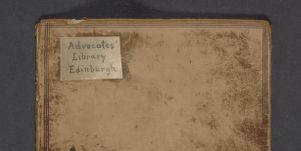
Gaelic medical manuscript
202 Items
Description: A 15th-century materia medica, with specifics and a calendar, decorated with ornamental initials and colour. Formerly belonging to the Beaton family of physicians, it was sold to the Advocates Library by Robert Freebairn, bookseller, in 1736.
Previous
OF
1,627
Next