The Diary of Arthur L. Linfoot
The diary entries are reproduced with no editorial excisions. They were written in Pitman’s shorthand, in small pocket diaries, and have been completely transcribed (for the first time in 100 years) by his son
Arthur L. Linfoot (ALL), who volunteered for the Royal Army Medical Corps in 1915, left diaries comprising an entry for every day from 1 January 1914 to 31 December 1918. Starting from 1 January 2014, each diary entry will appear on-line at http://www.arthurlinfoot.org.uk/ on the evening of the day 100 years exactly after the day to which it refers.
CREATOR
Christopher Linfoot
DATE
1914-01-01 - 1918-12-31
LANGUAGE
eng
ITEMS
1
INSTITUTION
Europeana 1914-1918
PROGRESS
METADATA
Discover Similar Stories
The diary of Arthur Wallis | Machine Gun Corps
60 Items
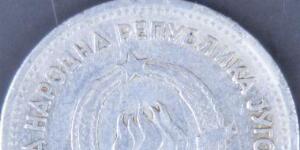
My maternal grandfather, Arthur Wallis, fought throughout the war on the Western Front as a member of the Machine Gun Corps. This is his diary from 1918... While on the front my grandfather bought a card embroidered by one of the local French women. He sent this card with a message inside to his daughter, Minnie, who is my mother. The letter reads: 'Dear Minnie, Just a few lines to let you know I am quite well, so I trust you and all at home are the same, trusting I may soon see you all.' The letter was written in August 1918 as the war was nearing the end. || 1918 diary, also containing a photograph and money, some from Yugoslavia. German shell case July 1917 from 77mm field gun Embroidered card

Arthur Hutt Tales of the V.C.
7 Items
Arthur Hutt VC (12 February 1889 – 14 April 1954) was an English recipient of the Victoria Cross, the highest and most prestigious award for gallantry in the face of the enemy that can be awarded to British and Commonwealth forces. He was the first person born in Coventry to be awarded the Victoria Cross. He was 28 years old, and a private in the 1/7th Battalion of The Royal Warwickshire Regiment, British Army during the First World War when the following deed took place at the battle of Passchendaele for which he was awarded the VC. On 4 October 1917, at 'Terrier Farm', southeast of Poelcapelle, during the advance on the villages of Poelcapelle and Passchendaele, Belgium, when all the officers and NCOs of No. 2 Platoon had become casualties, Private Hutt took command of and led the platoon. He was held up by a strong post but immediately ran forward alone and shot the officer and three men in the post; between 40 and 50 others surrendered. Later, having pushed too far, he withdrew his party, covering them by sniping the enemy, and then carried back a wounded man to shelter. After he had consolidated his position, he then went out and carried in four more wounded under heavy fire. The attached account of his actions was written by James Price Lloyd of the Welsh Regiment, who served with Military Intelligence. After the war, the government to destroyed all the archives relating to this propaganda (section MI 7b (1)). They were regarded as being too sensitive to risk being made public. Remarkably these documents have survived in the personal records of Captain Lloyd. Many of these papers are officially stamped, and one can trace the development of many individual articles from the notes based on an idea, to the pencil draft which is then followed by the hand-written submission and the typescript. The archive Tales of the VC comprises 94 individual accounts of the heroism that earned the highest award for valour, the Victoria Cross. These are recounted deferentially and economically, yet they still manage to move the reader. Date stamp: 3 June 1918. || Article with annotations.

Arthur Powell’s Diary
1 Item
Arthur Powell’s great nephew donated his diary from World War One to the Museum so that it could be looked after. Arthur’s service number was 320707 and he served with the Royal Engineers, at one time he was dispatched with the Inter-Allied Commission. Arthur’s diary is unusual in that it is written in a French prayer book that he found in a Peronne Cathedral. It is sporadic and very gruesome in its descriptions of what he saw. Arthur’s nephew transcribed some sections of the diary for us which are included in the PDF document attached. || Arthur Powell's Diary in a French Prayer Book.