Percival Cameron Chaplin
Percival Cameron Chaplin was the uncle of Elisabeth Sturgess, who submitted these items. In 1915 Percy Chaplin captured a German flag in Windhook, Namibia Windhoek. The inscription on the flag reads: This flag I took from the Germans at Windhuk, German South West African Campaign, 1915. P. C. Chaplin (Sgt.). Gen. Botha's Staff. There is also a photograph of General Botha's staff and the car (25 horse power Vauxhall Prince Henry type tourer), driven by Percival Chaplin. There were two articles published at the time about this, and about the ensign (pennant flag) carried on General Botha's staff car, maybe from February-July 1915.
(Botha was a veteran of the Boer wars, fighting with the Transvaal commandos. During the Great War Botha was involved in suppressing the revolt of the Boers. After the First World War Botha briefly led the British military mission to Poland. He was a highly-thought by Winston Churchill for his skills as a general.)
Photograph of German car and staff, Articles from The Motor and Autocar, Flag (with narrative on edge)
CREATOR
Elisabeth Sturgess
DATE
1915
LANGUAGE
eng
ITEMS
13
INSTITUTION
Europeana 1914-1918
PROGRESS
METADATA
Discover Similar Stories

Soldier called Cameron?
1 Item
Faded photograph of WW1 soldier || This is a photo of my late aunt's father and on the back is written that he was the eldest son of an old English Catholic family. He died of wounds in 1918. He has a Military Medal ribbon and it's possible that the very faint letters on his shoulder are KOSB (King's Own Scottish Borderers). My grandmother was called Cameron at one time so perhaps that was his surname. || || Soldier named Cameron || Photograph

William Marson | 7th Battalion Queen's Own Cameron Highlanders
7 Items
William Marson || || Interview || William Marson Sr || Interview with Dr William Marson
POW diaries - Captain Percival Lowe
346 Items
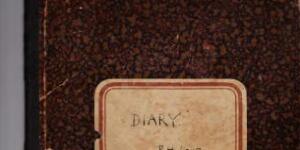
My great-grandfather was captured in the first weeks of the Great War, just at the start of the use of trenches, to the east of Paris in the department of the Aisne. A seasoned combatant, with experience in Boer war and the Ashanti campaigns, he came from an era that is foreign to us today. The story starts as he is aiming his rifle at one of his own men who is attempting to surrender because their trench is being overrun, and their position no longer tenable. My great-grandfather is knocked unconscious by schrapnel at the moment he intends to shoot his own man, and spends the next four years in various German POW camps. This diary, which is one in a series documenting his years serving the King in the British Army, documents in fine detail his attitude to his captors, and fellow inmates. The language and attitudes are often shocking to our over-sensitive politically correct ears, but tell an engaging story of one soldier trying to make sense of his captivity. He returned home in 1917 during a prisoner exchange in Switzerland. Confronted with ambivalent attitudes to his service and capture by his compatriots, and not being able to empathise with the horrors of the western front, he becomes disillusioned. A great cartoonist and draughtsman, one of the delights of these diaries are the constant drawings and sketches that elaborate the daily entries. The tone of the diaries is often mired in minutiae, which reflects the desolation of spirit a captured soldier must feel. || || Diary || An unwilling guest of the Kaisar 1914 - 1917