Transcriptions (63,428 Items)

0% NOT STARTED
100% EDIT
0% REVIEW
0% COMPLETED
Diary 8: May - December 1940
Item 36
Transcription: Left page Notes subsequently dictated. dates not quite certain Thursday June 20th Disquieting announcement from Bordeaux on the French wireless. Same evening J.A sent League lorries for his personal belongings at Vichy without informing any one and leaving League secret papers and the luggage ofvthe staff at Vichy. Friday June 21st At a Directors' meeting J A said he proposed transfer of technical Sections to ILO administratively and retention of only about 8 people in Secretariat. I said I would approve of transfer on the understanding it was merely a method to facilitate the exit from Switzerland of our technical sections as Winant was more likely to succeed in making arrangements than we were. Saturday June 22nd I sent to Vichy for League papers. I received large deputation from British Commonwealth staff here concerned as to possibility of return in case separate armistice made in France and in view of threatened attack on England. Questions raised dealt with administrative points and also point as for example, their moral position vis-à-vis the League if an opportunity of repatriation occurred and they took it. Avenol: J.A called me immediately afterwards in a violent temper, asked me what was going on. I explained; he denounced the British staff as cowards; a somewhat violent altercation followed.

0% NOT STARTED
100% EDIT
0% REVIEW
0% COMPLETED
Diary 8: May - December 1940
Item 33
Transcription: The British Minister then passed to another point on which he had received instructions from his Government to make enquiries, i.e., the question of the transfer to the International Labour Office of the technical services. His Government were less keen on this transfer and had a distinct preference for the Princeton University invitation. The Secretary-General fully explained to him how the matter stood, and why he had started unofficial conversations with Mr. Winant on this point. The advantages of a transfer to the I.L.O. were exactly those which the Secretary-General had been endeavouring to secure when he had first received the Princeton University invitation. In other words, this transfer would not affect the international status of our officials; in the second place, economies would be made on overhead charges; last but not least: the U.S.A. were members of the I.L.O. and Mr. Winant had such contacts with the U.S.A. administration that he was the most likely person to obtain an invitation to go to America, in which case the transferred services would also go to the U.S.A. It was, of course, understood that this transfer would not entail a constitutional severance with the Secretariat, our technical services only temporarily having to be housed in the Labour Office, and the Director of the I.L.O. acting, so to speak, by delegation of the Secretary-General. The constitutional ties between the Secretary-General and these services would not be severed, and the Secretary-General's authority would be exercised provisionally by delegation to the Director of the I.L.O. Mr. Kelly said that his Government were anxious to be assured that the Secretary-General would, before taking such a step, consult Member States. The Secretary-General assured him that such were his own intentions. Incidentally, the Secretary-General would also, in the case of the Princeton University invitation, have to consult Member States before accepting such invitation, even if the United States expressed the view that they had no objection to such transfer. Mr. Kelly said that he understood the Secretary-General's preoccupations and he would inform the Foreign Office accordingly.
0% NOT STARTED
0% EDIT
100% REVIEW
0% COMPLETED
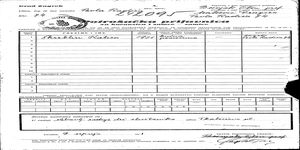
Potrošačka kartica prezime Škreblin
Item 1
Transcription: Grad Zagreb Ulica, trg ili ina oznaka: Pavla Radića Kbr. 74 A. REG.BROJ: 242095 Prezime i ime podnosioca prijave: Bośnjak Oton prof. Prezime i ime i stan kućevlasnika: Matiević Dragica Pavla Radića 74 Potrošačka prijavnica za kućanstva i samce - samice POTPISANI OVIM MOLIM, DA MI SE IZDA POTROŠAČKA ISKAZNICA, TE PODJEDNO IZJAVLJUJEM POD ODGOVORNOŠĆU IZ ČL. 18 ST. 1 NAREDBE O RASPODJELI (RACIONIRANJU) ŽIVOTNIH NAMIRNICA, DA SE U MOJEM KUĆANSTVU HRANE SLIJEDEĆE OSOBE: REDNI BROJ PREZIME I IME GODINA ROĐENJA ODNOS PREMA PODNOSIOCU PRIJAVE ODN. STARJEŠINI ZANIMANJE MJESTO RADA 1 Škreblin Katica 1921 kućna pomoćnica Zagreb Pavla Radića 74 2 PRIRAST: (ispunjava vlast) 1 2 ODPAD: (ispunjava vlast) 1 2 UJEDNO IZJAVLJUJEM POD ISTOM ODGOVORNOŠĆU, DA U MOJEM KUĆANSTVU POSTOJE SLIJEDEĆE ZALIHE ŽIVOTNIH NAMIRNICA U KILOGRAMIMA ODNOSNO LITRAMA: PŠENICA ZRNO BRAŠNO RAŽ ZRNO BRAŠNO JEČAM ZRNO BRAŠNO KUKURUZ ZRNO KLIP BRAŠNO TJESTENINE JESTIVO ULJE MAST SOL ŠEĆER KAVA SAPUN ZA PRANJE PETROLEJ POVEĆANJE PŠENICA ZRNO BRAŠNO RAŽ ZRNO BRAŠNO JEČAM ZRNO BRAŠNO KUKURUZ ZRNO KLIP BRAŠNO TJESTENINE JESTIVO ULJE MAST SOL ŠEĆER KAVA SAPUN ZA PRANJE PETROLEJ Živežne namirnice nabavljat ću: U radnji: Nabavli. radnja drž. službenika, Ulica: Tkalčićeva ul. Zagreb, 09/07/1941 POTPIS PODNOSIOCA PRIJAVE Bošnjak Oton prof. OVA PRIJAVNICA STOJI DIN 0*75 I NE SMIJE SE SKUPLJE PRODAVATI. OBRAZAC K. ČL. 2 ST. 3 NAREDBE O RASPODJELI (RACIONIRANJU) ŽIVOTNIH NAMIRNICA OD 27. SIJEČNJA 1941.

0% NOT STARTED
100% EDIT
0% REVIEW
0% COMPLETED
Kriegserlebnisse von Helmuth Schellenberg an der Westfront (nach Tagebuch erstellt)
Item 8
Transcription: item 8 - 2 - dort blieben wir den ganzen Tag neben der Landstrasse lie- gen. Die Offiziere erzählten allerlei: Lüttich durch Hand- streich genommen; wir (29 Div.) sind die einzigen Truppen am Ober-Rhein; die gelbe Brigade hat bei Galfingen ein güns- tiges Teilgefecht gehabt, aber doch Mühlhausen geräumt und sich bei Eichwald verschanzt; wir müssten auf alle Fälle den Rhein halten. Vom Anmarsch der 28. Div. und Deimlings wußten wir nichts; auch mit den gerüchtweisen oft bei Hünningen auf- getretenen Bayern oder gar Oesterreichern wars nichts. Meine Stielerkarte wurde von den Offizieren eifrigst studiert. Abends als ich gerade auf Posten gegen Flieger stand und schon Vor- bereitungen zum Biwak getroffen wurden, wurde doch noch auf- gebrochen; Hügelheim, links an Mühlheim vorbei nach Baden- weiler; mein rechter Absatz brannte zur Verzweiflung. Quar- tier in der Dachkammer eines Hotels; da ein Sofa ungeeignet war, schlief ich mit andern im Bett, dem letzten für lange. Am Morgen schnelles Antreten, dann gabs aber noch langes Herumstehen, wobei man von allen Seiten Kaffee und wieder Kaffee bekam, wovon der Soldat auch viel verträgt. Marsch nach Mühlheim und weiter nach Neuenburg botanischen Angedenkens. An der Rheinbrücke schaut uns der Großherzog an. Drüben kommen wir durch die Schützengräben. Jn Banzen- heim wie schon in Neuenburg gibt es viel Wasser in Kübeln und Eimer. Man schwitzt aber auch in der Marschkolonne un- heimlich und das ganze Gebäck (beim Ausmarsch wogen: Torni- ster 30 Pfund, Koppelriemen 20 Pfund, Gewehr 8 Pfund. Im Laufe des Krieges kamen noch Decken und Gasmasken dazu.) drückt unleidlich; dass die Kolonne oft, aber immer kurz hält, machts auch nicht besser. Schon liegen einige schlapp am Weg, zu unserm Stolz von unserer Kompagnie die wenigsten. Endlich biegen wir (schon jenseits des Kanals) auf einen Sei- tenholzweg ein. Jch bin froh, dass ich meine Stiefel los- werde; mit etlichen vom Stabsarzt aufgeschnittenen Blasen schlupfe ich in die Schnürschuhe; man fühlt sich nur ohne die Rohre und mit den beiderseits zum Tornister herausschauenden Sohlen etwas weniger soldatisch. Nach der Mittagsrast geht es weiter, wie man glaubt, gleich ins Gefecht gegen Mühlhausen; doch es kommt nur ein langes Herumliegen und Stellungswech- seln im Wald, doch hört man den Kampf, immer französisches Salvenfeuer. Die schweren 14er, die eine zeitlang neben uns feuerten, fahren vergnügt vor, da die feindlichen Geschütze abgefahren seien. Doch kommt schon in der Dämmerung ein ver- sprengter 169er, der vor Angst den Kopf verloren hat und ver- kündet, das ganze Regiment 169 sei gefallen. Trotzdem schlie- fen die meisten von uns in der Nacht ein, obwohl wir mit Bay- onett, Armbinde, Parole (feste druff) längs einem Weg im Wald lagen und nicht wussten, ob wir die Franzosen oder sie uns angreifen würden. Jch lag eine Zeitlang auf Seitenposten. Kurz vor Tagesanbruch gings auf Umwegen zum Wald hinaus, wo wir zum ersten Mal in den Dörfern brennen sahen. Wir legten uns zuerst in ein Wäldchen, wo wir uns gleich eingruben, dann in eine Kiesgrube; von da aus gingen wir in Schützenlinien, wellenweise gegen den Mühlhauser Rebberg vor, wohin auch un- sere Artillerie schoss; da aber die Franzosen offenbar nicht mehr da waren, sammelten wir uns auf der Strasse zwischen
Story Metadata (32,265 Stories)

22 Items
55% NOT STARTED
36% EDIT
9% REVIEW
0% COMPLETED
Ratne bojne dopisnice - Feldpost iz Prvog svjetskog rata
22 Items
Description: Ratne bojne dopisnice (Feldpost) bile su najfunkcionalnije sredstvo komuniciranja vojnika sa porodicom tokom Prvog svjetskog rata. Većinom su bile cenzurisane i na njima se nalazio pečat vojne cenzure, regimentalni pečat i pečat vojne pošte. Na velikom broju dopisnica nalazila su se sva tri pečata, međutim, nerijetko se nalazio samo jedan ili dva. Poznato je da su vojnici bili strogo kažnjavani ukoliko su svjesno pisali bilo šta što otkriva vojne tajne. Pisati su mogli samo vojnici. Sve što bi napisali davalo bi se vojnom cenzoru da to pregleda i tek kad on odobri moglo se poslati porodici. Čitajući pisma, može se uvidjeti da su ona poprilično štura, te da su dobro pazili o svemu šta je napisano, upravo iz razloga da bi izbjegli probleme sa nadređenim. Feldpost sistem Austro-ugarske Monarhije, omogućavao je vojnicima da komuniciraju sa svojim najbližima. Sačuvane razglednice i pisma pružaju lični pogled na to kako su pojedini vojnici doživljavali sukobe. || Devet bojnih dopisnica (Feldpost)

160 Items
0% NOT STARTED
42% EDIT
58% REVIEW
0% COMPLETED
Dumitru Nistor prizonier de război în Japonia
160 Items
Description: Este un volum de jurnal din cele trei deţinute de Biblioteca Judeţeană Octavian Goga Cluj. || Dumitru Nistor, ţăran din satul Năsăud s-a născut în 1893. Visând din copilărie să călătorească şi să vadă ţări străine, în 1912, când vine vremea “număraşului” (recrutării) el cere să fie primit nu în miliţia ardeleană, unde erau recrutaţi de obicei românii, ci în marina austro-ungară. Terminând şcoala de marină, după o călătorie la Viena, este îmbarcat ca Geschützvormeister (“primul îndreptător de tun”) pe vasul SMS Kaiserin Elisabeth, cu destinaţia Asia. Prins de război în Marea Chinei, crucişătorul Kaiserin Elisabeth participă la câteva bătălii navale, pentru ca în 2 noiembrie 1914 să se hotărască scufundarea lui. Echipajul pierde şi lupta terestră, este luat prizonier de japonezi şi transportat în arhipelagul nipon. Timp de zece luni, ţăranul-marinar din Năsăud va fi prizonier într-o mănăstirea buddhistă din Himeji, iar apoi mutat într-un lagăr, construit special pentru prizonierii germani şi austrieci, la Aonogahara, nu departe de Kobe, unde va rămâne până la sfârşitul anului 1919.
1 Item
0% NOT STARTED
0% EDIT
100% REVIEW
0% COMPLETED
Potrošačka kartica prezime Škreblin
1 Item
Description: Potrošačka kartica sadrži podatke o osobama koje su se prijavljivale radi raspodjele živežnih namirnica u Zagrebu tijekom Drugog svjetskog rata. Sadrži podatke o podnosiocu prijave (ime i prezime, adresa) te osobama koje se nalaze u kućanstvu, njihova imena, godine rođenja, odnos prema podnosiocu prijave, zanimanje i mjesto rada.

1 Item
0% NOT STARTED
0% EDIT
0% REVIEW
100% COMPLETED
Enrichments (403,223 Items)
0% NOT STARTED
100% EDIT
0% REVIEW
0% COMPLETED
0% NOT STARTED
100% EDIT
0% REVIEW
0% COMPLETED

100% NOT STARTED
0% EDIT
0% REVIEW
0% COMPLETED
0% NOT STARTED
0% EDIT
100% REVIEW
0% COMPLETED
Potrošačka kartica prezime Škreblin
Item 1
Description: Potrošačka kartica prezimena Bošnjak, Registracijski Broj kartice: 242095.
Previous
OF
100,806
Next